

Knowing the size of your data helps you plan storage, spot growth early and keep performance steady. PostgreSQL has built-in functions for this. You can run them in psql over SSH or in any SQL tool.
Prepare a test table
DROP TABLE IF EXISTS employee;

CREATE TABLE employee (
    id SERIAL PRIMARY KEY,
    name VARCHAR(120) NOT NULL,
    salary NUMERIC(10,2)
);

INSERT INTO employee (name, salary)
SELECT 'Employee ' || n, (1000 + (n % 3) * 1000)
FROM generate_series(1, 1000) AS n;
This creates a table with 1,000 rows to measure.
Method 1: pg_size_pretty
pg_size_pretty turns a number of bytes into a readable size like 8192 bytes or 12 MB.
SELECT pg_size_pretty(pg_database_size(current_database())) AS database_size;
SELECT pg_size_pretty(pg_relation_size('employee')) AS table_size;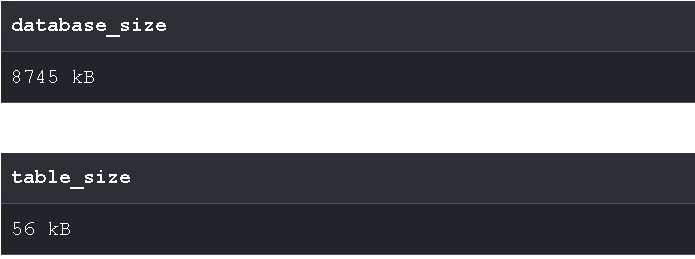
Method 2: pg_database_size
pg_database_size returns the size of a database in bytes.
SELECT pg_database_size(current_database()) AS database_size_bytes;
SELECT pg_size_pretty(pg_database_size(current_database())) AS database_size_human_readable;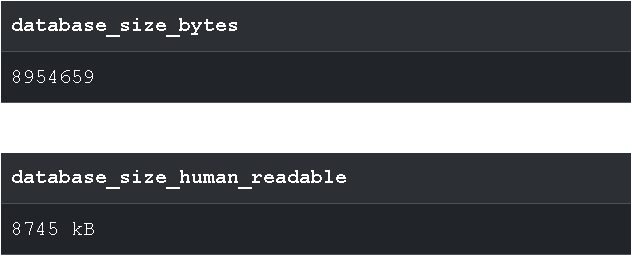
To list all databases:
SELECT datname, pg_size_pretty(pg_database_size(datname)) AS size
FROM pg_database
ORDER BY pg_database_size(datname) DESC;
Method 3: pg_tablespace_size
A tablespace is a storage location on disk. The default one is pg_default.
SELECT pg_tablespace_size('pg_default') AS tablespace_size_bytes;
SELECT pg_size_pretty(pg_tablespace_size('pg_default')) AS tablespace_size_human_readable;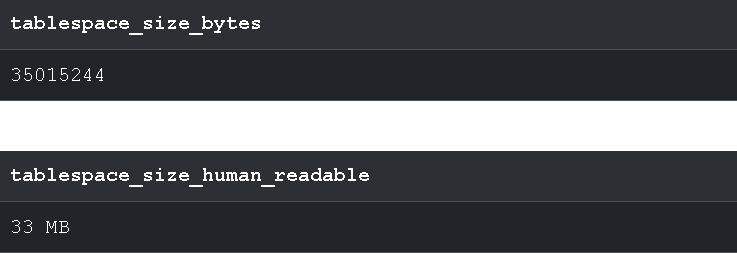
Method 4: pg_relation_size
pg_relation_size returns the size of the main data of a table or index, in bytes. It does not count indexes or TOAST data.
SELECT pg_relation_size('employee') AS table_size_bytes;
SELECT pg_size_pretty(pg_relation_size('employee')) AS table_size_human_readable;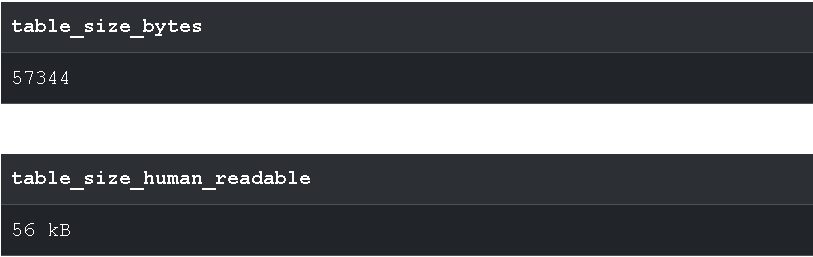
Method 5: pg_total_relation_size
pg_total_relation_size includes the table, its indexes and TOAST data. It is the real disk use of the table.
SELECT pg_total_relation_size('employee') AS total_size_bytes;
SELECT pg_size_pretty(pg_total_relation_size('employee')) AS total_size_human_readable;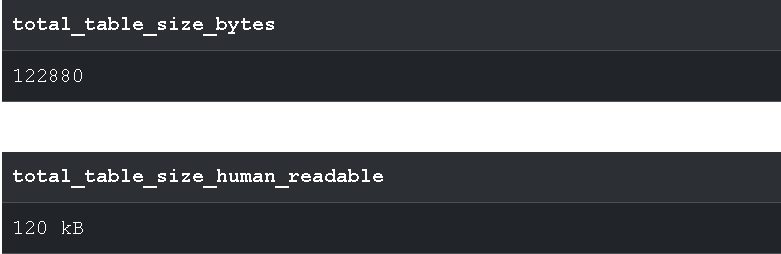
Find the biggest tables
SELECT relname AS table_name,
       pg_size_pretty(pg_total_relation_size(relid)) AS total_size
FROM pg_catalog.pg_statio_user_tables
ORDER BY pg_total_relation_size(relid) DESC
LIMIT 10;
psql shortcuts
\l+      list databases with sizes
\dt+     list tables with sizes
\di+     list indexes with sizes
Quick recap
pg_database_sizefor a database,pg_total_relation_sizefor a table with indexes.- Wrap any size in
pg_size_pretty()to read it easily.