

A JOIN combines rows from two or more tables, using a column they share.
Join types
- INNER JOIN returns rows with a match in both tables.
- LEFT JOIN returns all rows of the left table and the matches from the right (NULL if none).
- RIGHT JOIN returns all rows of the right table and the matches from the left.
- FULL JOIN returns all rows when there is a match in either table. MySQL has no
FULL JOIN, so combine a LEFT and a RIGHT join withUNION. - CROSS JOIN returns every combination of rows (the Cartesian product).
- SELF JOIN joins a table with itself.
Create the example tables
CREATE TABLE departments (
    department_id INT PRIMARY KEY,
    department_name VARCHAR(50)
);

CREATE TABLE employees (
    employee_id INT PRIMARY KEY,
    first_name VARCHAR(50),
    last_name VARCHAR(50),
    department_id INT
);

INSERT INTO departments VALUES (1, 'Sales'), (2, 'IT'), (3, 'HR');
INSERT INTO employees VALUES
    (1, 'Anna', 'Lee', 1),
    (2, 'Ben', 'Khan', 2),
    (3, 'Carla', 'Diaz', NULL);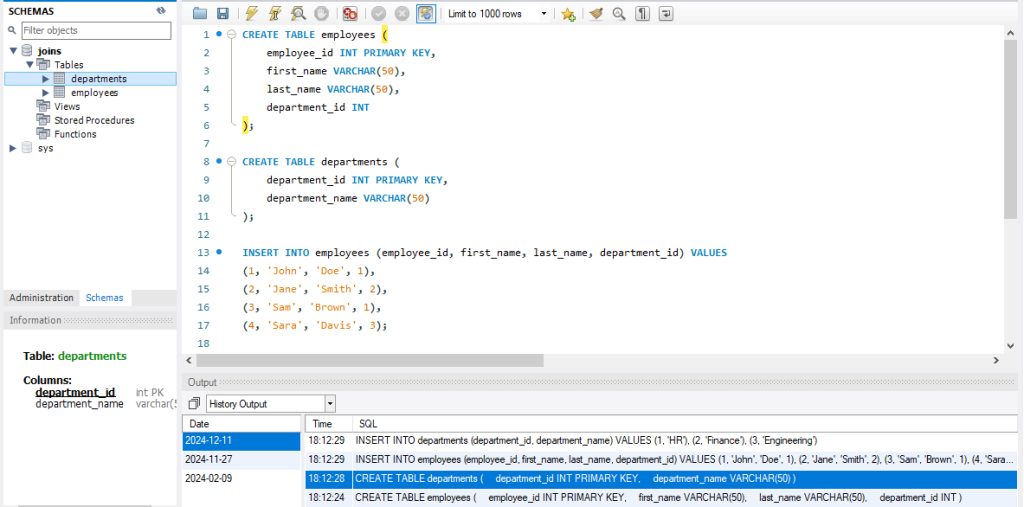
INNER JOIN
SELECT employees.first_name, employees.last_name, departments.department_name
FROM employees
INNER JOIN departments ON employees.department_id = departments.department_id;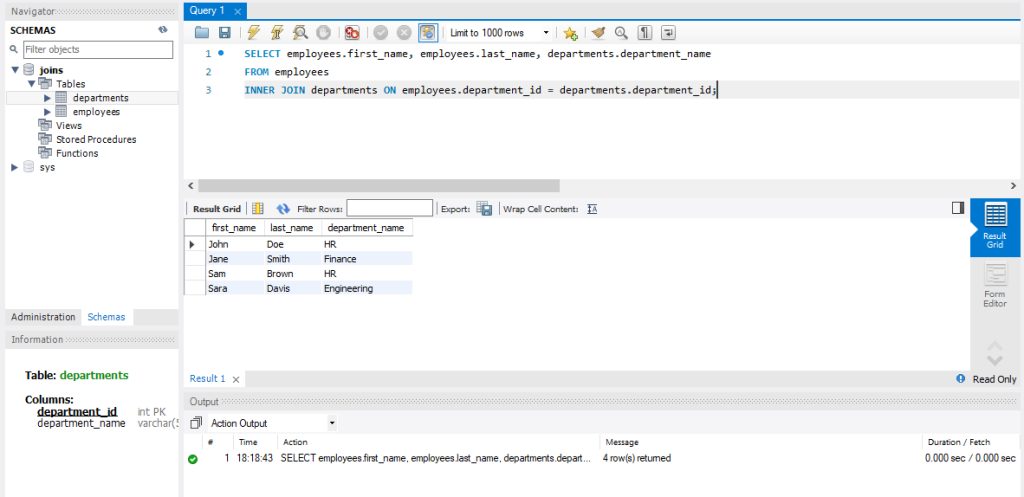
Only Anna and Ben appear. Carla has no department, and HR has no employee.
LEFT JOIN
SELECT employees.first_name, employees.last_name, departments.department_name
FROM employees
LEFT JOIN departments ON employees.department_id = departments.department_id;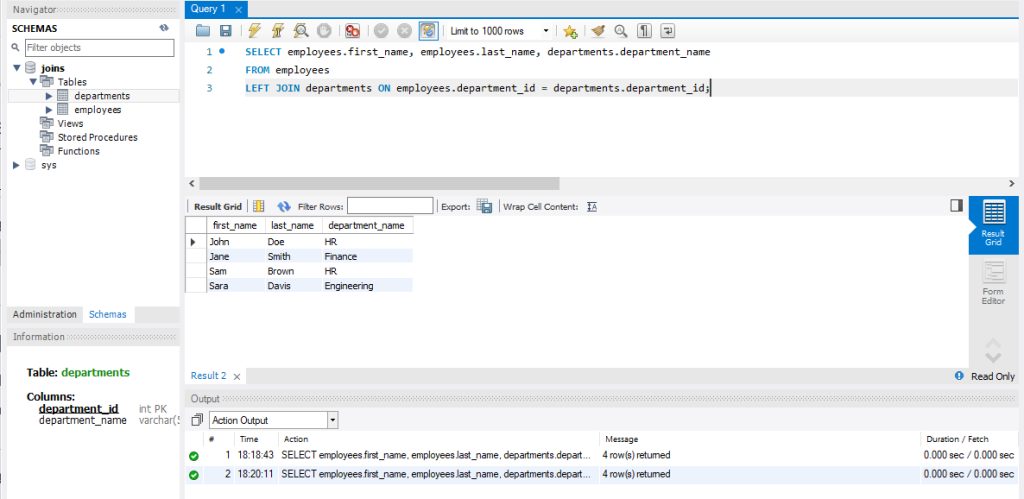
All employees show up. Carla's department is NULL.
RIGHT JOIN
SELECT employees.first_name, employees.last_name, departments.department_name
FROM employees
RIGHT JOIN departments ON employees.department_id = departments.department_id;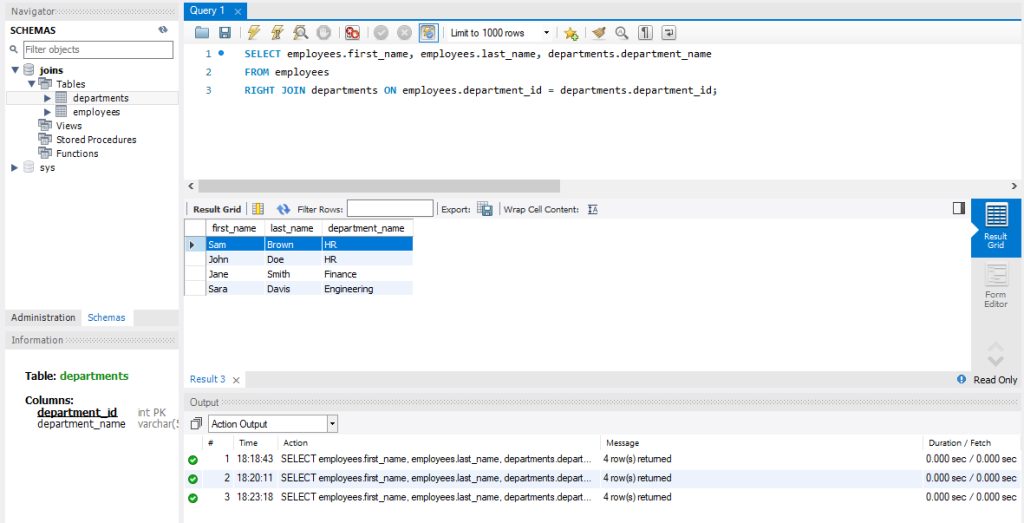
All departments show up, including HR with no employee.
FULL JOIN (with UNION)
SELECT employees.first_name, departments.department_name
FROM employees
LEFT JOIN departments ON employees.department_id = departments.department_id
UNION
SELECT employees.first_name, departments.department_name
FROM employees
RIGHT JOIN departments ON employees.department_id = departments.department_id;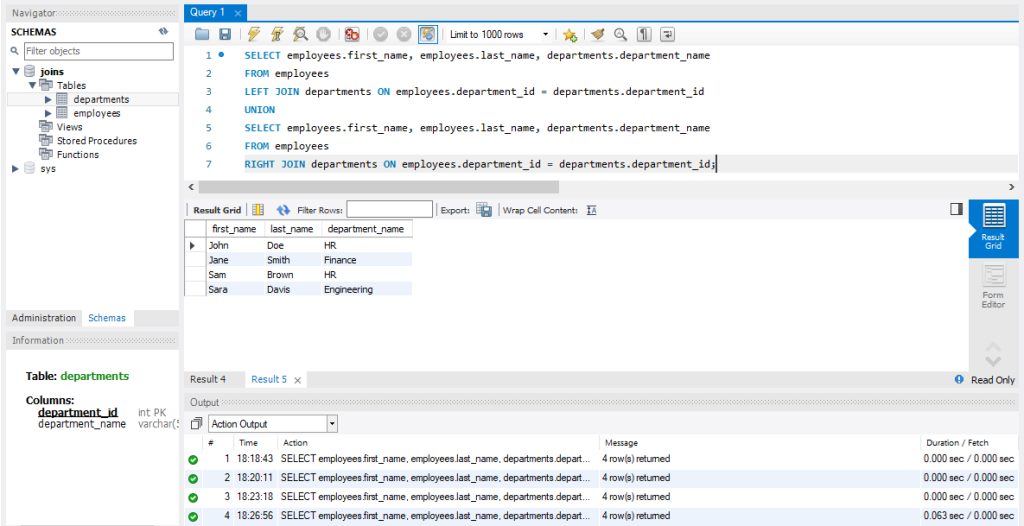
CROSS JOIN
SELECT employees.first_name, departments.department_name
FROM employees
CROSS JOIN departments;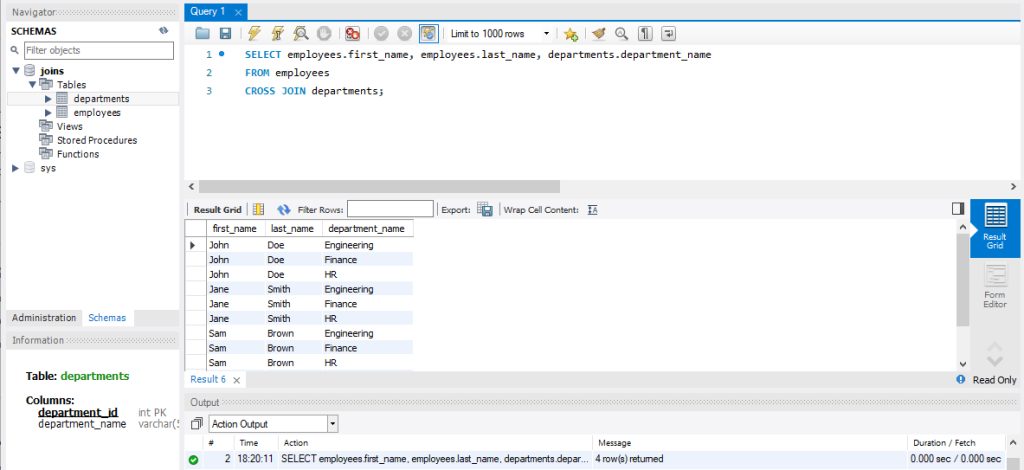
3 employees times 3 departments gives 9 rows.
SELF JOIN
A self join compares rows of the same table. For example, if employees has a manager_id column:
SELECT e.first_name AS employee, m.first_name AS manager
FROM employees e
LEFT JOIN employees m ON e.manager_id = m.employee_id;
Tips
- Index the columns you join on.
- Use table aliases (
e,d) to keep queries short. - Select only the columns you need, not
*.
Quick recap
- INNER keeps matches only, LEFT keeps the whole left table, RIGHT the whole right table.
- Use UNION to build a FULL JOIN in MySQL.