

What is an SSL certificate?
An SSL certificate is a digital ID card for your website. It turns on the padlock and the https:// start of the address. A company called a Certificate Authority (CA) checks you and then issues the card. The three types differ in how much checking the CA does.
DV: Domain Validation
The CA checks one thing only: that you control the domain.
- You prove it by email, by a DNS record, or by a small file.
- It is quick, often within minutes.
- It shows the padlock but no company name.
- Good for blogs, small sites and portfolios.
OV: Organization Validation
The CA checks the domain and also that your business is real.
- You may need to give business papers or details.
- It takes from a day to a few days.
- Your company name appears in the certificate details.
- Good for business sites and online shops.
EV: Extended Validation
This is the strictest check. The CA looks closely at the legal, physical and operational facts of your company.
- It takes longer and needs more papers.
- It shows the verified company name in the certificate details.
- Good for banks, large shops and sites that handle very sensitive data.
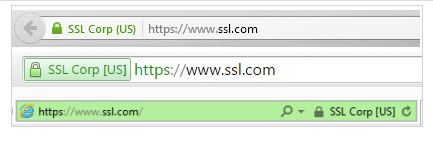
Note that modern browsers no longer show a bright green bar for EV. The extra trust is mostly in the certificate details.
Comparison
| Type | What is checked | Speed |
|---|---|---|
| DV | Domain control | Fastest |
| OV | Domain and business | Medium |
| EV | Domain and full company checks | Slowest |
Which one should you pick?
- Simple site or blog: DV is enough.
- Business that takes orders: choose OV.
- Very sensitive data: consider EV.
Tip: All three give the same level of encryption. The difference is only how much the CA checks who you are. Ask Hostvento support which types are available to you.
Quick recap
- DV checks the domain only.
- OV also checks your business.
- EV checks the most.
- Encryption strength is the same for all.